

When Did I Register To Vote In Colorado
When and why did Democrats and Republicans switch platforms?
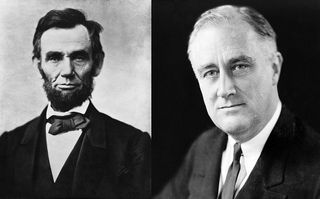
The Republican and Democratic political parties of the Usa didn't always stand up for what they do today. The more liberal Democrats, traditionally represented by the color blue, and the correct-wing Republicans, past the colour reddish, each have a defined set of belief systems, merely these were in one case very different.
What did the Republicans and Democrats originally believe?
During the 1860s, Republicans, who dominated northern states, orchestrated an ambitious expansion of federal power, described past the Free Lexicon every bit "a system of government in which power is divided between a key authority and elective political units." This helped to fund the transcontinental railroad, the country university organization and the settlement of the West by homesteaders, and instating a national currency and protective tariff. The Democrats, who dominated the South, opposed those measures. Indeed, according to the author George McCoy Blackburn ("French Paper Opinion on the American Civil War ," (Greenwood Printing, 1997) the French newspaper Presse stated that the Republican Doctrine at this fourth dimension was "The about Liberal in its goals only the nearly dictatorial in its means."
Post-Civil War and Franklin Roosevelt
Afterward the United States triumphed over the Amalgamated States at the end of the Ceremonious War, and under President Abraham Lincoln, Republicans passed laws that granted protections for Black Americans and advanced social justice (for example the Civil Rights Act of 1866 though this failed to end slavery). Once more Democrats largely opposed these apparent expansions of federal ability.
Sounds like an alternate universe? Fast forward to 1936.
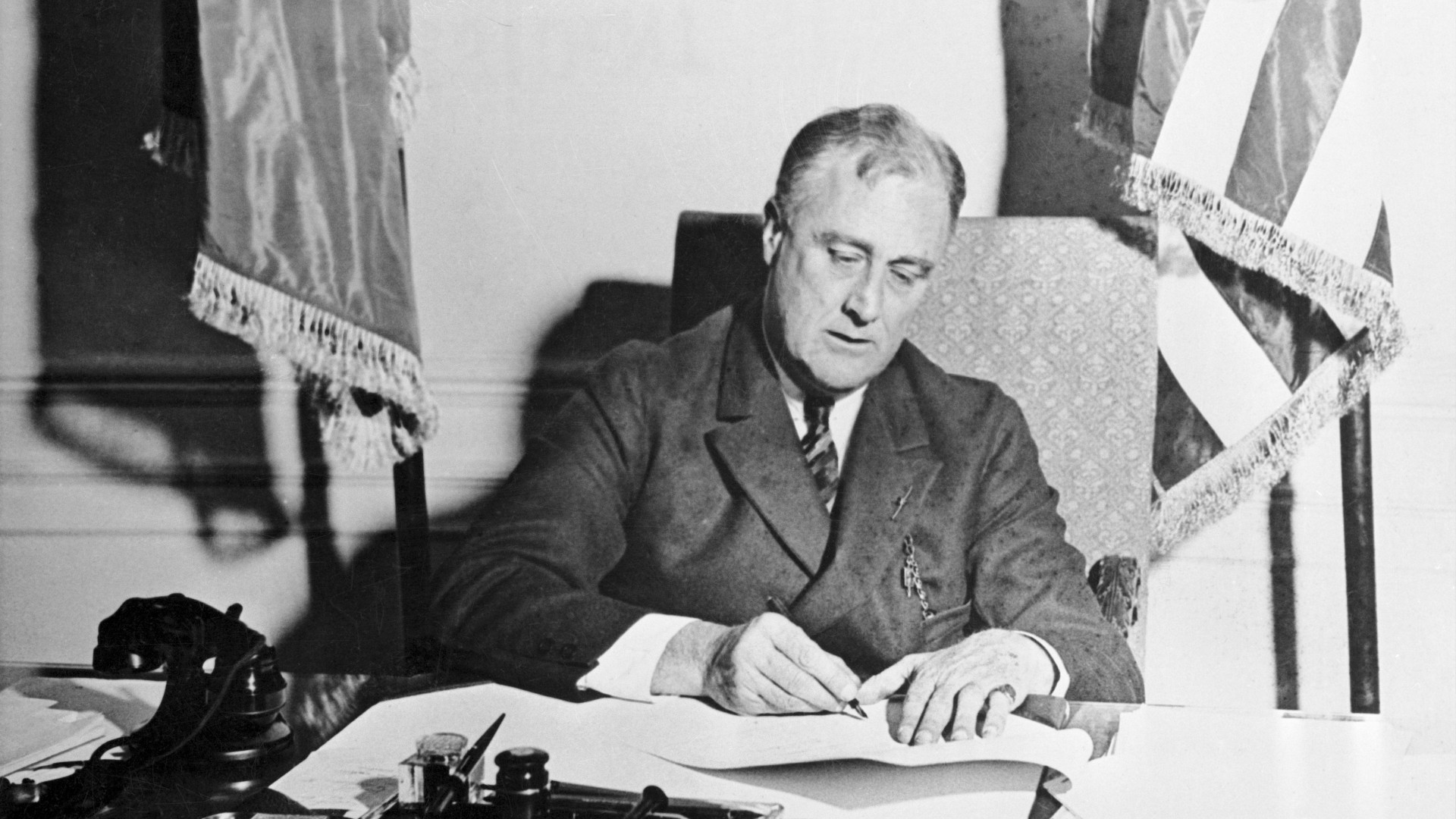
Democratic President Franklin Roosevelt won reelection that yr on the strength of the New Deal. This was a set of reforms designed to aid remedy the furnishings of the Bang-up Depression, which the FDR Presidential Library and Museum described equally: "a severe, world -wide economic disintegration symbolized in the United States by the stock market crash on "Blackness Th," October 24, 1929." The reforms included regulation of financial institutions, the founding of welfare and pension programs, infrastructure development and more. It was these measures that ensured Roosevelt won in a landslide against Republican Alf Landon, who opposed these exercises of federal power.
So, old between the 1860s and 1936, the (Democratic) party of small regime became the party of big authorities, and the (Republican) political party of big regime became rhetorically committed to curbing federal power.
How did this switch happen?
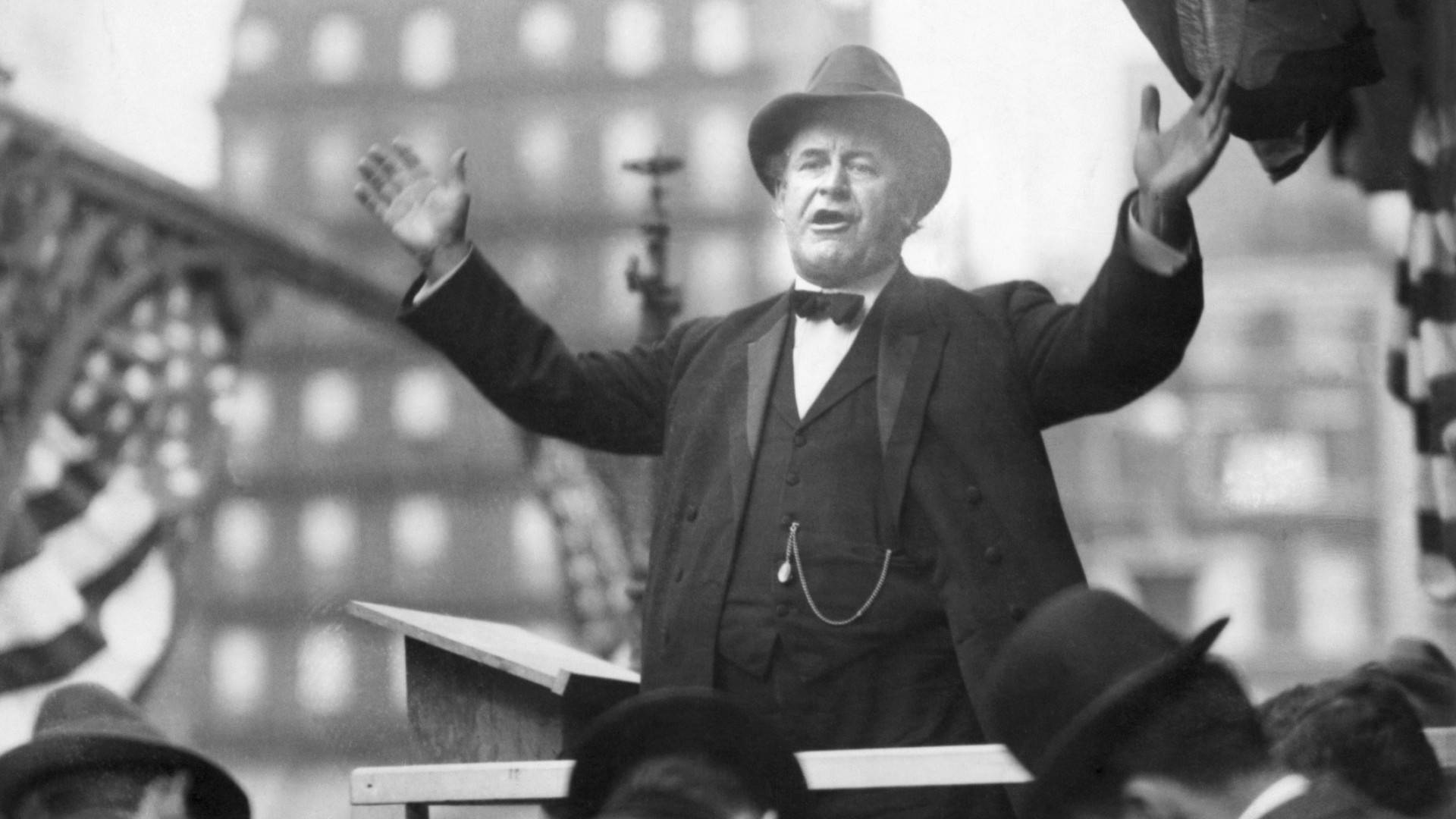
Eric Rauchway, professor of American history at the University of California, Davis, pins the transition to the turn of the 20th century, when a highly influential Democrat named William Jennings Bryan (all-time known for negotiating a number of peace treaties at the end of the First World War, according to the Role of the Historian) blurred party lines past emphasizing the government's role in ensuring social justice through expansions of federal power — traditionally, a Republican stance.
Only Republicans didn't immediately adopt the opposite position of favoring limited government.
Related: 7 great congressional dramas
"Instead, for a couple of decades, both parties are promising an augmented federal government devoted in various means to the cause of social justice," Rauchway wrote in an archived 2010 web log post for the Chronicles of Higher Education. Only gradually did Republican rhetoric drift toward the counterarguments. The party'due south pocket-sized-government platform cemented in the 1930s with its heated opposition to Roosevelt's New Deal.
But why did Bryan and other turn-of-the-century Democrats outset advocating for large regime?
Big Regime
According to Rauchway, they, like Republicans, were trying to win the West. The access of new western states to the union in the post-Civil War era created a new voting bloc, and both parties were vying for its attention.
Related: Busted: half dozen Civil State of war myths
Democrats seized upon a manner of ingratiating themselves to western voters: Republican federal expansions in the 1860s and 1870s had turned out favorable to big businesses based in the northeast, such every bit banks, railroads and manufacturers, while small-time farmers similar those who had gone westward received very little.
Both parties tried to exploit the discontent this generated, by promising the general public some of the federal help that had previously gone to the business sector. From this point on, Democrats stuck with this opinion — favoring federally funded social programs and benefits — while Republicans were gradually driven to the counterposition of easily-off authorities.
From a business perspective, Rauchway pointed out, the loyalties of the parties did not really switch. "Although the rhetoric and to a degree the policies of the parties do switch places," he wrote, "their core supporters don't — which is to say, the Republicans remain, throughout, the party of bigger businesses; it'south simply that in the earlier era bigger businesses desire bigger government and in the later era they don't."
In other words, before on, businesses needed things that simply a bigger authorities could provide, such every bit infrastructure evolution, a currency and tariffs. Once these things were in identify, a small, hands-off government became better for business concern.
Originally published on Live Science on Sept. 24, 2012. This article was updated on Dec. 14, 2021.

Source: https://www.livescience.com/34241-democratic-republican-parties-switch-platforms.html
Posted by: bakeruntrus.blogspot.com
0 Response to "When Did I Register To Vote In Colorado"
Post a Comment